WELCOME TO THE ARCHIVE (1994-2014) OF THE MAQUILA SOLIDARITY NETWORK. For current information on our ongoing work on the living wage, women's labour rights, freedom of association, corporate accountability and Bangladesh fire and safety, please visit our new website, launched in October, 2015: www.maquilasolidarity.org
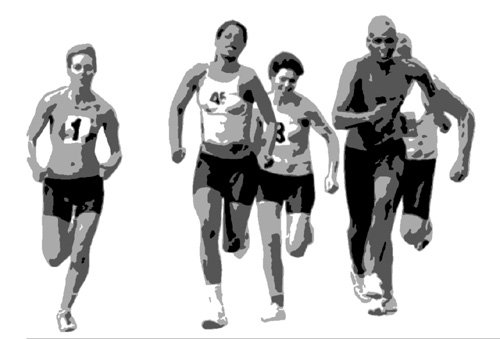
Before the 2004 Summer Olympics in Athens, the Play Fair at the Olympics Campaign – the biggest international worker rights mobilization of its kind ever undertaken – brought the world’s attention to the underside of the sportswear industry: the abysmal working conditions endured by the young women and men, and children, who make the shoes, jerseys, footballs and other items in contract factories and subcontract facilities around the world.
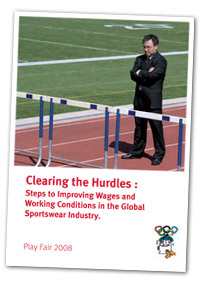
In anticipation of the Beijing Summer Olympics, in the spring of 2008 MSN wrote a paper for the Play Fair Campaign entitled “Clearing the Hurdles: Steps to Improving Wages and Working Conditions in the Global Sportswear Industry.” The paper found that substantial violations of worker rights were still the norm for workers in the sportswear industry.
Clearing the Hurdles identifies four central hurdles that need to be overcome by the sportswear industry to make real progress on the litany of worker rights violations plaguing the industry.
These are:
• Lack of respect for freedom of association and the right to bargain collectively;
• Insecurity of employment caused by industry restructuring; and
• Abuse of short-term labour contracting and other forms of precarious employment.
• poverty wages
Prior to the 2010 Winter Olympics in Vancouver, MSN coordinated the Play Fair Campaign in Canada, which included a public forum in Vancouver on our proposal to the Vancouver Organizing Committee for the adoption of an ethical licensing policy. MSN also supported the Play Fair Campaign leading up to the 2012 Summer Olympics in London, England.
The "Play Fair at the Olympics" campaign was one of the biggest ever mobilisations against abusive labour conditions. Read more about the international campaign
Read about how sportswear companies responded to the Play Fair Alliance's Programme of work for the Sportswear Industry.
 The Play Fair at the Olympics campaign has published a new report detailing systematic and widespread exploitation of workers in 10 sportswear factories in China, Sri Lanka and the Philippines producing sportswear for the London 2012 Olympic Games.
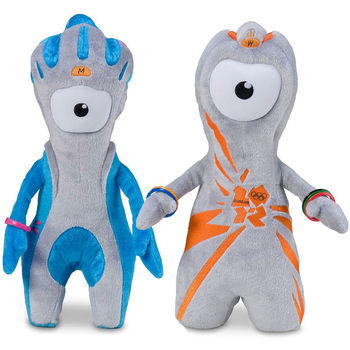 Following the discovery of worker rights violations in two Chinese factories producing Olympic-branded merchandise, organizers for the London 2012 Olympic Games stepped up their efforts to eliminate worker rights abuses in factories making Olympic-brand products - including becoming the first Olympic Games to disclose the factories where Olympic goods are made. Although abuses continue to be uncovered, this is a step forward for Olympics organizing bodies.
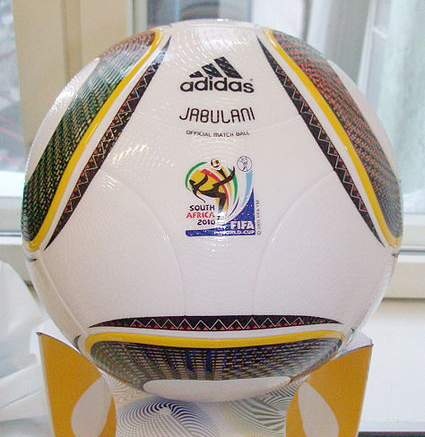 With the FIFA World Cup in South Africa just days away, the soccer world's leading organization is being asked to take a closer look at the dismal realities faced by soccer ball stitchers. Workers stitching soccer balls in Pakistan, India, China and Thailand continue to experience alarming labour rights violations, including child labour, non-payment of the minimum wage and extensive use of temporary labourers.
 In the run-up to the February Vancouver Winter Olympic Games, an international coalition of worker rights organizations is releasing its rating of commitments made by major sportswear brands to eliminate sweatshop abuses in their global supply chains. The ratings are being released on the newly launched Clearing the Hurdles website.
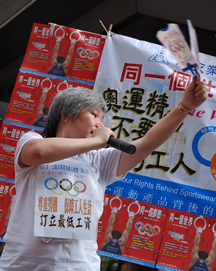 A sportswear working group involving the Maquila Solidarity Network, the International Textile, Garment and Leather Workers Federation, the Clean Clothes Campaign and the International Trade Union Confederation has set out steps sportswear brands need to take to begin to overcome four hurdles that have hindered progress on worker rights in the industry.
As the clock ticks down to the Beijing Olympics, international sportswear companies are amassing huge profits and arranging multi-million dollar sponsorship deals with the Games, Olympic athletes and national teams.
Meanwhile, workers producing their goods are still living in poverty. In a new report, “Clearing the Hurdles: Steps to improving working conditions in the global sportswear industry”, Play Fair 2008 calls upon brands, manufacturers, and multi-stakeholder initiatives to overcome four major hurdles to make real, measurable progress on wages and working conditions in the global sportswear industry.
The Vancouver Organizing Committee (VANOC) has developed a program to require environmental, labour rights and aboriginal employment standards for its purchasing and licensing. MSN and its Canadian partners worked with VANOC to improve their initial program by making it more comprehensive, effective and transparent.
On July 10, 2008, following the Ethical Trading Forum in Vancouver at which transparency and Olympic licensing was debated with companies, trade unions, NGOs and Olympic organizers, Nike publicly released the full list of factories that produced its products for the Beijing 2008 Olympics.


Unless otherwise noted, all work on this website is licensed under a
Creative Commons Attribution-Noncommercial-Share Alike 2.5 Canada License.