WELCOME TO THE ARCHIVE (1994-2014) OF THE MAQUILA SOLIDARITY NETWORK. For current information on our ongoing work on the living wage, women's labour rights, freedom of association, corporate accountability and Bangladesh fire and safety, please visit our new website, launched in October, 2015: www.maquilasolidarity.org
In our last issue of the Update, we reported on the controversy surrounding a recent investigation of three Apple Inc. supplier factories in China owned by Foxconn, the world's largest electronics manufacturer. The Fair Labor Association's (FLA's) investigation found evidence of widespread violations of local laws and the FLA's code of conduct, including overtime hours well above legal limits, failure to provide workers their full overtime premium pay, numerous health and safety violations, and union committees in which most of the representatives were management personnel.
Because the FLA’s investigation has been such a prominent part of the public discussion about Apple, Foxconn, and the rights of the workers making their products, it is important to review some of the key issues identified in the FLA report and to summarize outstanding questions and concerns that have been identified by SACOM. MSN's brief analysis is an effort to do that.
 The Peoples Tribunal on a Living Wage, which was held in Phnom Penh on February 5 and 6, found that the combination of inadequate nutrition, excessive working hours, and exposure to hot, dusty working environments and harmful chemicals amounts to "a systematic violation of [workers'] fundamental right to a decent human life."
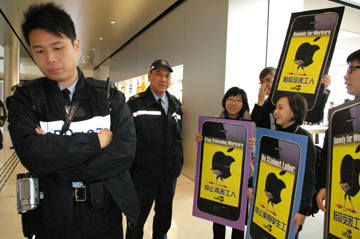 On March 29, the Fair Labor Association (FLA) released a much-anticipated report on its investigation into the labour practices at three Foxconn factories in China employing close to 180,000 workers who manufacture electronic devices for Apple including iPads and iPhones.
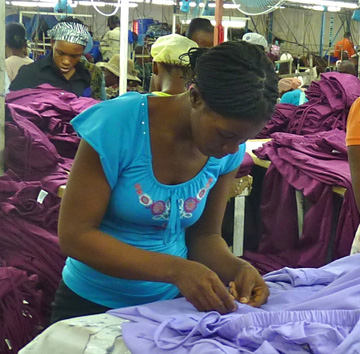 Shortly after a new union was formed last September in Haiti's growing apparel manufacturing sector, six of the seven workers who serve on the union's executive committee were fired or forced to resign by the factories where they worked. But we're pleased to report that thanks to concerted efforts by Haitian and international labour rights groups, all but one of the workers have now been reinstated and are back at work.
The apparel industry was widely hailed in some circles as a vital economic opportunity for Haiti, particularly after the devastating earthquake which hit the country in January 2010. Although the creation of approximately 26,000 jobs in the country is certainly welcome, the full benefits of those jobs will only be felt if the workers have access to their legal rights, including the right to form unions and bargain collectively, and are paid a living wage.
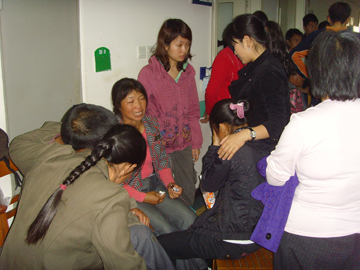
Family members react - May 2011
Students & Scholars Against Corporate Misbehaviour (SACOM) has released a statement blaming a May 20 explosion at Foxconn's Ipad plant on the company, which it says is putting productivity over worker safety. The blast, which killed two workers and injured 16, could have been prevented, says SACOM. The group points to an early May report in which it raised issues with dangerous aluminum dust in the factory's polishing department where the blast occurred.
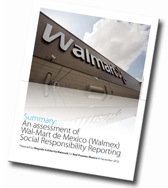 A new report by MSN and Red Puentes Mexico examining Wal-Mart Mexico's (Walmex) CSR reporting, finds weaknesses in the company's reporting and practices, particularly in the areas of labour rights and the environment. "Walmex needs to better address underlying policy issues such as the presence of protection contracts in most of its retail outlets, its treatment of over 23,000 "volunteer" youth baggers and the lack of consultation with civil society stakeholders on social and environmental issues," says Beatriz Lujan, of the Authentic Labour Front, a member organization of Red Puentes Mexico.
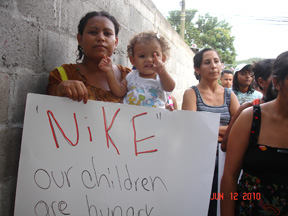 The Central General de Trabajadores de Honduras (CGT) and Nike announced a ground-breaking agreement today that will provide a US$1.5 million fund for workers in Honduras that formerly produced Nike apparel. According to a press release from Nike and the CGT, workers will also receive a year's access to the health care system, training and priority hiring. The agreement comes after intense pressure was put on Nike by a student-led campaign that had convinced some US universities to end lucrative licensing agreements with Nike.
Last week we alerted you to the tragic suicides at a Chinese factory making products for many of the world's best-known electronics brands - including Apple's new iPads. This week we're outraged by yet another death at the Foxconn factory, this time apparently due to exhaustion after Yan Li, a 27-year old Foxconn engineer, worked continuously for 34 hours.


Unless otherwise noted, all work on this website is licensed under a
Creative Commons Attribution-Noncommercial-Share Alike 2.5 Canada License.