WELCOME TO THE ARCHIVE (1994-2014) OF THE MAQUILA SOLIDARITY NETWORK. For current information on our ongoing work on the living wage, women's labour rights, freedom of association, corporate accountability and Bangladesh fire and safety, please visit our new website, launched in October, 2015: www.maquilasolidarity.org
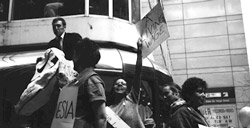 The garment industry is renowned for low wages, excessive overtime and poor working conditions. In spite of the fact that consumers are spending more and more on clothes, there are few signs of improvement for workers. In fact, the opposite is the case: downward pressure on wages means that many garment workers find their weekly wage packet is not enough to live on, in spite of the fact that they often work extremely long hours.
Several codes call for the payment of a "living wage". Many claim it is impossible to come up with a measurable standard for the living wage, or that wage levels should be determined through collective bargaining between trade unions and management.
In fact, there are a variety of techniques actually available to make at least a reasonable estimate of the range in which a living wage would fall, for example by using the "poverty line", the "purchasing power index", the so-called "market basket" approach, or a combination of these methods. Other benchmarks could include "best practice" negotiated wage levels elsewhere in the sector, or the wage levels called for by unions or labour-related groups active in the area.
The point about collective bargaining is certainly valid, but when no union is present in the workplace (which is the case in most garment industry workplaces), buyers should ensure that wage levels allow workers to live. This can of course be adjusted later when a collective bargaining process goes into effect. Expecting workers to live off of a wage that simply cannot be lived off of is unrealistic and seems to contradict any claims of "corporate social responsibility" made by buyers.


Unless otherwise noted, all work on this website is licensed under a
Creative Commons Attribution-Noncommercial-Share Alike 2.5 Canada License.