WELCOME TO THE ARCHIVE (1994-2014) OF THE MAQUILA SOLIDARITY NETWORK. For current information on our ongoing work on the living wage, women's labour rights, freedom of association, corporate accountability and Bangladesh fire and safety, please visit our new website, launched in October, 2015: www.maquilasolidarity.org
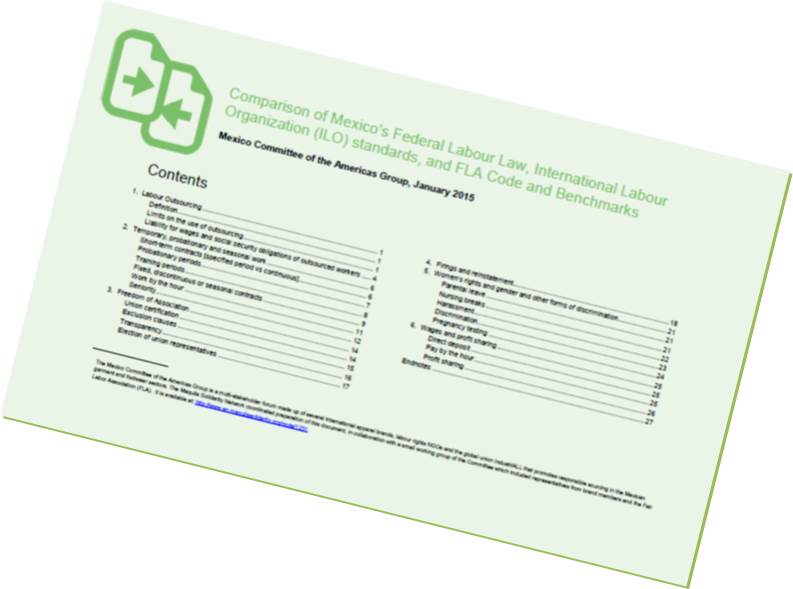 This document, prepared by MSN for the Mexico Committee of the Americas group, was designed primarily as a tool for companies sourcing apparel products from Mexico to better understand the labour standards obligations of their Mexican suppliers and the rights of workers in their supplier factories. It should also serve as a useful reference document for trade union and labour rights organizations advocating on behalf of Mexican workers.

Part of MSN's work to promote Freedom of Association in Mexico has focused on engaging with international apparel brands on steps they can take to ensure that their Mexican suppliers respect the right of workers to organize and bargain collectively. Our strategy has been to leverage brand influence on their suppliers to achieve a more positive climate for freedom of association in Mexican supply chains.
MSN's Freedom of Association in Mexico Tool Kit, which was updated in December 2014, sets out how brands can strengthen their FOA policies, auditing procedures and corrective action plans, as well as communication with vendors, suppliers and licensees on those policies and expectations. It also promotes greater transparency so that workers are aware of their rights and any agreements negotiated on their behalf.
(September 2014) MSN's Global Survey of Living Wage Initiatives reviews a number of important studies, campaigns and initiatives to help achieve a living wage for garment workers in the global supply chains. The publication of this study was made possible by support from the European Union. It is part of a larger initiative that includes the Clean Clothes Campaign in Holland and the Asia Floor Wage Alliance.
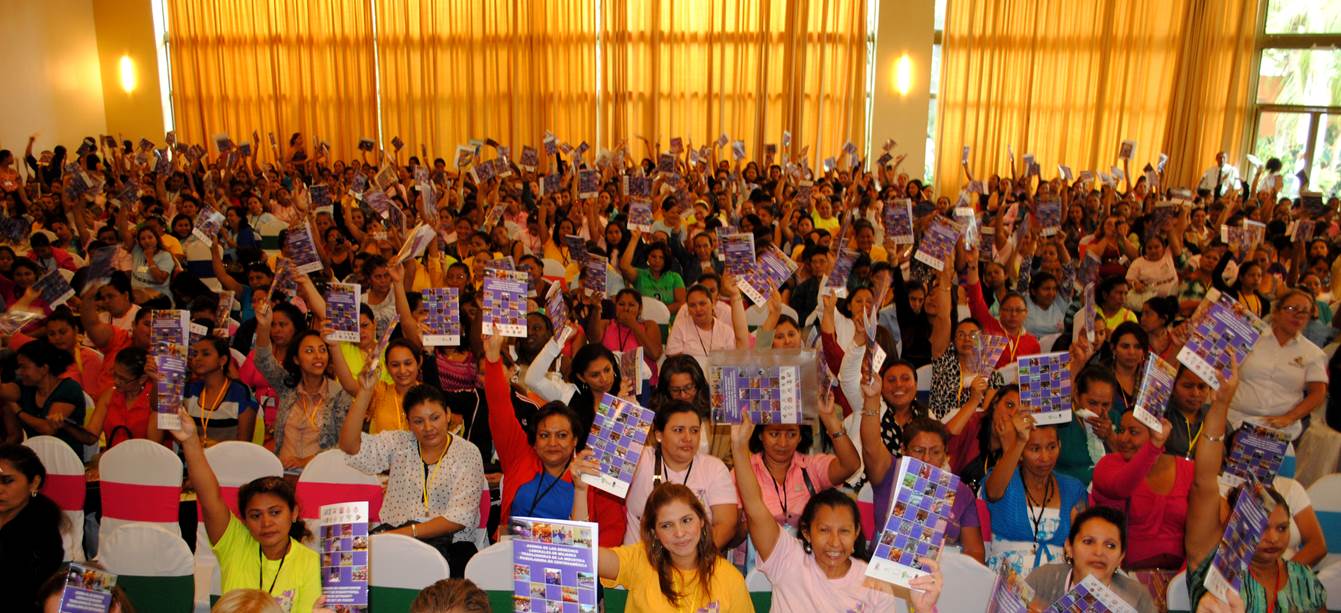 On March 2, in Managua, Nicaragua, the “Women’s Labour Rights Agenda for the Central American Maquiladora Industry” was publicly launched at the annual Colloquium of the Maria Elena Cuadra Movement of Working and Unemployed Women (MEC).
 A new study co-authored by the Maquila Solidarity Network (MSN - Canada), the Honduran Independent Monitoring Team (EMIH), and Professionals for Corporate Social Auditing (PASE - Nicaragua) challenges the conventional wisdom that competing on the basis of cheap labour is the only option for poor garment producing countries.
 Precarious work, and in particular the use of short-term contracts and third-party employment agencies that limit workers’ rights and benefits, is recognized as a growing problem in the garment industry world-wide, one that is increasing workers’ vulnerability and limiting the exercise of freedom of association.
 Can CSR ratings help improve labour practices in global supply chains?, a new paper published by the Maquila Solidarity Network (MSN) and the Project on Organizing, Development, Education and Research (PODER), examines the potential of rating systems to drive improvements in supply chain labour practices. Through interviews with CSR experts, representatives from companies like Levi's, Gap and others that have been rated on supply chain labour issues, labour rights advocacy groups, and rating system developers, the paper highlights some key challenges facing rating systems and how some rating systems have tried to overcome, or at least minimize, those challenges.

In this period of global economic instability, the lives of workers employed in global supply chains are becoming more and more insecure. Not only are workers confronted on a daily basis with the very real possibility that their factories will be closed as production is shifted to other countries and regions with lower labour costs, they are also facing changing employment relationships in their own countries that are making their working lives more precarious.
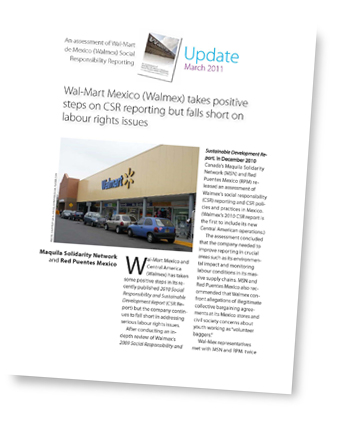 Wal-Mart Mexico and Central America (Walmex) has taken some positive steps in its recently published 2010 Social Responsibility and Sustainable Development Report (CSR Report) but the company continues to fall short in addressing serious labour rights issues. If Walmex is genuinely committed to improving its CSR programs and public reporting, the company needs to go beyond the small, though laudable, reporting advancements it has made in 2010 and tackle the difficult and pressing issues being raised by civil society stakeholders.


Unless otherwise noted, all work on this website is licensed under a
Creative Commons Attribution-Noncommercial-Share Alike 2.5 Canada License.