WELCOME TO THE ARCHIVE (1994-2014) OF THE MAQUILA SOLIDARITY NETWORK. For current information on our ongoing work on the living wage, women's labour rights, freedom of association, corporate accountability and Bangladesh fire and safety, please visit our new website, launched in October, 2015: www.maquilasolidarity.org
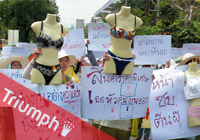
Triumph International fires union leader for wearing a political T-shirt; 3,000 workers strike back
On July 30, 2008, a Thai subsidiary of Triumph International, one of the world’s largest makers of intimate apparel, fired union president Jitra Kotchadej for wearing an unfashionable t-shirt.
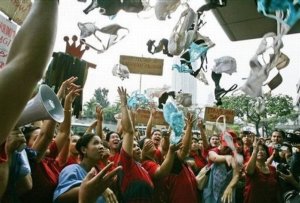
Swiss-based lingerie maker Triumph International is being accused of anti-union behavior as it lays off thousands of workers in Thailand and the Philippines. Triumph International supplier, Body Fashion Thailand, announced on June 29th that it would lay off half of its 4200 workers. In the Philippines 1660 Triumph garment workers will lose their jobs by the end of August due to closures.
On November 27, 2008, a Bangkok labour court gave Body Fashion Thailand, a wholly-owned subsidiary of Triumph International, the green light to dismiss union president Jitra Kotshadej.
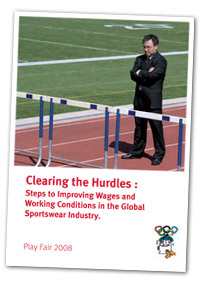
As the clock ticks down to the Beijing Olympics, international sportswear companies are amassing huge profits and arranging multi-million dollar sponsorship deals with the Games, Olympic athletes and national teams.
Meanwhile, workers producing their goods are still living in poverty. In a new report, “Clearing the Hurdles: Steps to improving working conditions in the global sportswear industry”, Play Fair 2008 calls upon brands, manufacturers, and multi-stakeholder initiatives to overcome four major hurdles to make real, measurable progress on wages and working conditions in the global sportswear industry.
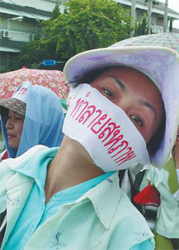 Thai workers end six week strike Between July 30 and September 13 more than 2,000 workers at the Thai subsidiary of underwear giant Triumph International went on strike to demand reinstatement of their union president, Ms. Jitra Kotchadej. Ms. Kotchadej was dismissed on July 29 in relation to her appearance during her private time in a national television debate wearing a t-shirt with the text ‘Those who do not stand are not criminals. Thinking differently is not a crime.’ The t-shirt refers to the right of people not to stand when the royal anthem is played and the abuse of lèse-majesté legislation to suppress political opposition.
Gina Form Bra factory workers in Bangkok, Thailand, fought to keep their unionized factory open after receiving word in early September 2006 that the owner was going to close the factory and shift orders to China or Cambodia. International brands including Warnaco, La Senza, Victoria's Secret and others bought apparel from the company. With the help of international organizations including the Maquila Solidarity Network, the workers were able to win a substantial severance package well above the norm in Thailand. Read more here



Unless otherwise noted, all work on this website is licensed under a
Creative Commons Attribution-Noncommercial-Share Alike 2.5 Canada License.