WELCOME TO THE ARCHIVE (1994-2014) OF THE MAQUILA SOLIDARITY NETWORK. For current information on our ongoing work on the living wage, women's labour rights, freedom of association, corporate accountability and Bangladesh fire and safety, please visit our new website, launched in October, 2015: www.maquilasolidarity.org
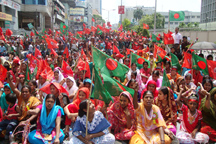 The Maquila Solidarity Network, together with our international allies including the Clean Clothes Campaign (CCC), the International Labour Rights Forum (ILRF), Workers Rights Consortium and the International Textile, Garment and Leather Workers' Federation (ITGLWF now IndustriALL) have regularly called attention to the need for structural measures to end the consistent and ongoing worker rights violations in the Bangladeshi garment industry.
A large amount of MSN's work focused on issues related to factory closures and workers' rights to receive fair compensation.
Since 1995, MSN worked extensively on campaigns defending the right of workers to organize and bargain collectively.
MSN participated in international campaigns for a living wage and in support of garment workers’ struggles in particular countries for a national minimum wage that would meet the basic needs of themselves and their families. Between 2012 and 2014, MSN collaborated with Central American partner organizations on studies of the growing gap between existing wages and the cost of living for garment workers in the four garment-producing countries in the region.
The local activists and organizations that advocate for women's and workers' rights are often themselves targetted by governments and others in order to silence their voices. MSN worked with local, national and international organizations to defend their right to speak out.
Precarious work, and in particular the abuse of short-term employment contracts and employment agencies, is recognized as a growing problem in the garment industry world-wide, and one that is increasing workers' vulnerability and limiting the exercise of freedom of association. MSN worked with national, regional and international counterparts to address this dangerous shift toward precarious work and the negative consequences for workers and their communities.
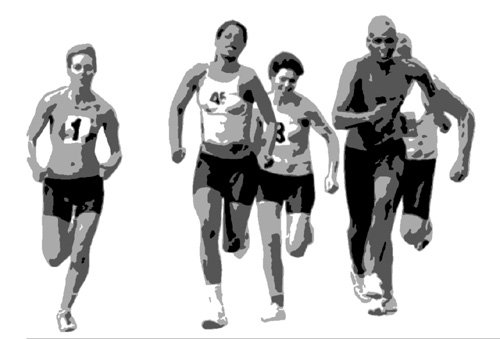
Before the 2004 Summer Olympics in Athens, the Play Fair at the Olympics Campaign – the biggest international worker rights mobilization of its kind ever undertaken – brought the world’s attention to the underside of the sportswear industry: the abysmal working conditions endured by the young women and men, and children, who make the shoes, jerseys, footballs and other items in contract factories and subcontract facilities around the world.
In December 2003, MSN, together with the Canadian Labour Congress and the Independent Federation of Honduran Workers (FITH), filed a formal complaint with the Fair Labor Association (FLA) concerning the unjust firings of workers suspected of union sympathies at Gildan Activewear's El Progreso factory in Honduras. The complaint alleged that there was a pattern of violations of freedom of association at the factory. On January 6, the same parties filed a complaint with the Worker Rights Consortium (WRC). Investigations by both the FLA and WRC confirmed MSN's allegations of violations of worker rights at the factory.
 From 2000 to 2008 MSN and our coalition partners in the Ethical Trading Action Group (ETAG) supported and participated in campaigns for the adoption of “No Sweat” ethical apparel licensing and purchasing policies by public institutions, including universities, school boards, and municipal and provincial governments.
Workers producing clothes for Wal-Mart at the Korean-owned Chong Won Fashion garment factory in the Philippines went on strike to end the employers' attempt to destroy their union through violence, mass firings and intimidation. The employer responded by shutting down the factory.


Unless otherwise noted, all work on this website is licensed under a
Creative Commons Attribution-Noncommercial-Share Alike 2.5 Canada License.